
Does My Child Need Speech Therapy? 7 Signs Parents Should Watch For
Every child develops speech and language skills at their own pace. Some children start talking early, while others take a little longer to express themselves. However, certain communication difficulties may indicate that a child could benefit from professional support.
Parents often wonder, “Does my child need speech therapy?” or “When should I consult a speech therapist?” Knowing the common signs can help parents decide when it may be useful to seek an assessment.
Speech therapy can support children with difficulties related to speech sounds, understanding language, expressing thoughts, social communication, fluency, and other communication skills.
Here are seven signs parents should watch for.
1. Your Child Is Not Meeting Expected Communication Milestones
Children gradually develop communication skills as they grow. These include understanding what others say, using words and sentences, responding to questions, and communicating their needs.
If your child is noticeably behind in several communication skills compared with what is generally expected for their age, it may be worth discussing this with a pediatrician or speech-language professional.
A delay does not automatically mean that a child has a disorder. Children develop differently, but an assessment can help determine whether additional support would be beneficial.
2. Your Child Is Difficult to Understand
Young children may naturally mispronounce some sounds while learning to speak. However, if your child's speech is frequently difficult for parents, teachers, or other familiar people to understand, it may be a sign that an evaluation is appropriate.
Some children may:
- Leave sounds out of words
- Replace one sound with another
- Have difficulty producing particular speech sounds
- Speak unclearly even when they know what they want to say
- Become frustrated when others cannot understand them
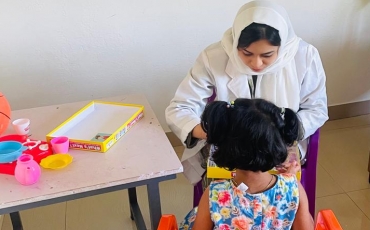
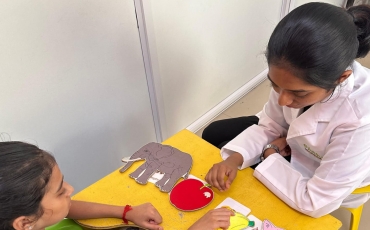
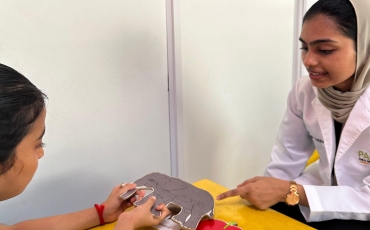
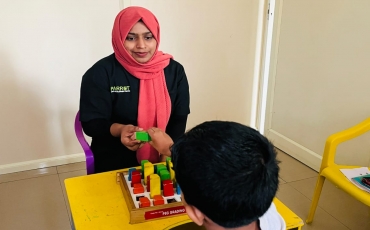
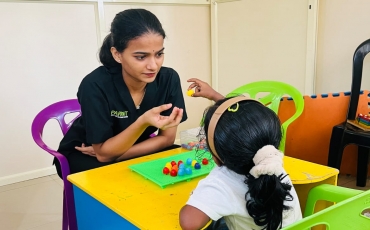
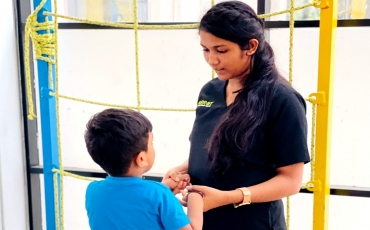
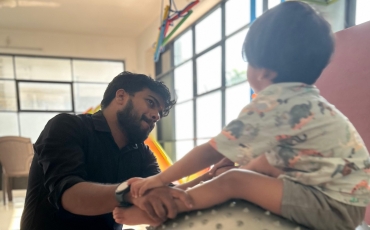
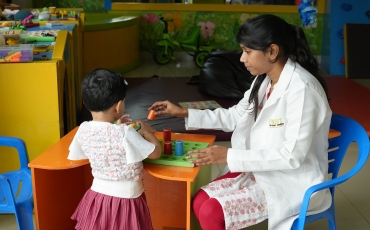
A speech therapist for children can assess speech sound development and identify areas that may need support.
3. Your Child Has Difficulty Understanding or Following Instructions
Speech and language development involves more than speaking clearly. Children also need to understand language.
You may notice that your child:
- Has difficulty following age-appropriate instructions
- Frequently misunderstands simple questions
- Struggles to understand new words
- Has difficulty answering questions appropriately
- Needs instructions repeated many times
These can be signs of receptive language difficulties. A professional assessment can help identify whether the child is having difficulty understanding language or whether another factor may be affecting communication.
4. Your Child Has Difficulty Expressing What They Want or Need
Some children understand what others say but struggle to communicate their own thoughts.
For example, a child may:
- Use fewer words than expected for their age
- Have difficulty combining words into sentences
- Struggle to describe an event or experience
- Find it difficult to answer questions
- Frequently point or use gestures because they cannot express themselves verbally
- Become frustrated when trying to communicate
These speech and language difficulties can affect everyday interactions at home and school.
Speech therapy can help children develop functional communication skills and express their needs, ideas, and feelings more effectively.
5. Your Child Repeats Words, Sounds, or Phrases Frequently
Repetition can occur naturally during language development. Children may repeat sounds or words while learning to communicate.
However, frequent repetition, prolonged repetitions, or noticeable difficulty getting words out may require further evaluation, particularly if the child appears frustrated or avoids speaking.
For children who experience fluency difficulties such as stammering, a speech-language professional can assess the pattern and provide appropriate guidance.
Early support can also help parents understand how to respond positively to a child's communication difficulties without creating additional pressure around speaking.
6. Your Child Has Difficulty Communicating Socially
Communication is also about interacting with other people.
Some children may have difficulty:
- Taking turns during conversations
- Responding when someone speaks to them
- Starting or maintaining an interaction
- Using or understanding gestures
- Maintaining a conversation
- Adjusting communication according to the situation
- Understanding certain social communication cues
These difficulties can occur for different reasons and should not be used on their own to diagnose a specific condition.
A comprehensive assessment can help understand the child's individual communication needs and determine what type of support may be appropriate.
7. Your Child Becomes Frustrated Because of Communication Difficulties
When children cannot communicate what they want, they may become frustrated.
You may notice behaviours such as:
- Crying when unable to express something
- Getting upset when others do not understand them
- Avoiding communication
- Becoming reluctant to participate in conversations
- Using gestures instead of words more often than expected
- Losing confidence when speaking
Communication difficulties can affect a child's participation at home, school, and during play.
If communication-related frustration is happening regularly, speaking with a professional can help identify the underlying difficulty and possible ways to support the child.
When Should You Consult a Speech Therapist?
Parents do not always need to wait until a communication difficulty becomes severe before seeking professional advice.
Consider consulting a Speech Therapist in Calicut if:
- You are concerned about your child's speech or language development
- Your child is not progressing in communication skills
- Your child's speech is difficult to understand
- Your child struggles to understand or follow instructions
- Your child has difficulty expressing thoughts or needs
- Your child frequently becomes frustrated while communicating
- Your child has ongoing fluency or pronunciation difficulties
- You notice a loss of previously acquired communication skills
A speech and language assessment can provide a clearer understanding of your child's current communication abilities and whether therapy or monitoring is appropriate.
What Happens During a Speech Therapy Assessment?
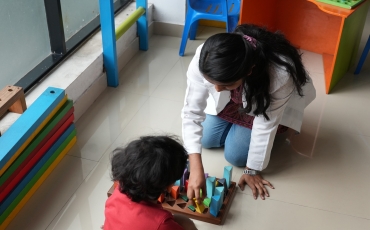
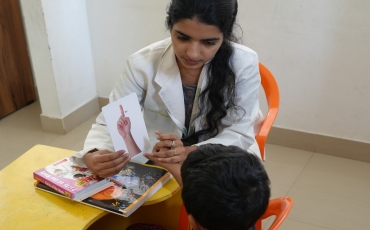
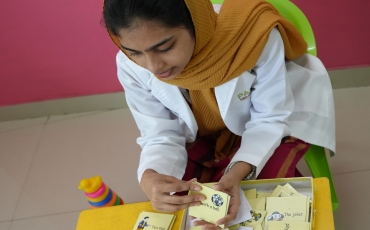
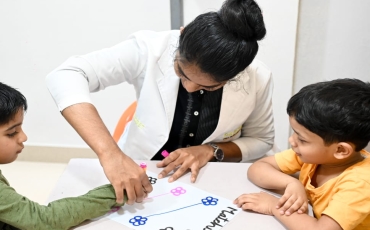
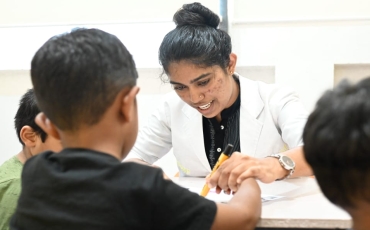
A speech therapy assessment is not simply about checking whether a child can pronounce words correctly.
Depending on the child's age and concerns, a speech-language professional may look at:
- Understanding of language
- Vocabulary
- Sentence development
- Speech sound production
- Ability to communicate needs and ideas
- Social communication
- Fluency
- Play and interaction skills
- Communication with parents and others
The assessment helps the therapist understand the child's strengths as well as areas where additional support may be useful.
For parents considering speech therapy for kids, this assessment is an important first step because therapy should be based on the child's individual needs rather than a one-size-fits-all approach.
You can also learn more about Speech Therapy Assessment for Children to understand what parents can expect during an evaluation.
Does Every Child With a Speech Delay Need Speech Therapy?
Not necessarily.
Children develop communication skills at different rates, and a temporary difference does not always mean that therapy is required.
However, if a child is showing multiple signs of difficulty, is not making expected progress, or has lost skills they previously had, professional evaluation can help identify the next step.
An assessment may result in recommendations for therapy, monitoring, home-based activities, referral to another professional, or further evaluation depending on the child's needs.
The goal is not simply to make a child speak more. It is to help the child communicate effectively and participate confidently in everyday life.
How Speech Therapy Can Help Children
Speech therapy is individualized according to a child's communication needs.
Depending on the assessment, therapy may support:
- Speech sound development
- Understanding language
- Vocabulary and sentence development
- Functional communication
- Social communication
- Fluency
- Communication confidence
- Parent-supported communication strategies
At a multidisciplinary Child Development Centre in Kozhikode, speech-language professionals can also work alongside other professionals when a child has broader developmental needs.
Supporting Your Child's Communication at Home
Parents play an important role in developing communication skills.
Simple everyday activities can encourage communication:
Talk During Daily Activities
Describe what you and your child are doing while eating, bathing, travelling, or playing.
Give Your Child Time to Respond
After asking a question, allow your child enough time to think and respond instead of answering immediately for them.
Read Together
Look at picture books and talk about characters, actions, objects, and events.
Follow Your Child's Interests
If your child is interested in cars, animals, or toys, use that interest to introduce new words and encourage interaction.
Avoid Pressuring Your Child to Speak
Instead of repeatedly asking a child to repeat a word, model the word naturally and encourage communication in a relaxed way.
Frequently Asked Questions
What are the signs my child needs speech therapy?
Common signs include difficulty understanding language, limited expressive language, unclear speech, difficulty communicating socially, ongoing fluency difficulties, or frustration caused by communication problems. An assessment is the best way to determine whether therapy is appropriate.
At what age should a child see a speech therapist?
There is no single age at which every child should see a speech therapist. If parents have concerns about communication or notice that a child is not progressing, they can seek professional advice rather than waiting for a particular age.
Can speech therapy help a child who understands but does not speak much?
Yes. A speech-language assessment can look at both understanding and expressive communication and help identify appropriate strategies based on the child's individual needs.
Does delayed speech always mean autism?
No. Delayed speech can have many possible causes, and speech delay alone does not diagnose autism. A qualified professional should assess the child's overall communication and development when there are concerns.
Where can I find a speech therapist in Calicut?
Parents looking for a Speech Therapist in Calicut can consider a professional assessment at a child development centre such as Parrot Child Development Centre, where children's communication needs can be assessed as part of a multidisciplinary approach.
Conclusion
Knowing the signs your child needs speech therapy can help parents recognize communication difficulties early and seek appropriate guidance.
If your child is having difficulty speaking, understanding language, expressing thoughts, interacting with others, or communicating comfortably, a professional assessment can help you understand their needs.
With the right support and consistent involvement from parents and caregivers, children can develop communication skills that help them participate more confidently in everyday life.
If you are concerned about your child's speech or language development, consider consulting a qualified speech-language professional for an individual assessment.