
When Should a Child Start Speech Therapy? A Parent’s Guide
Every child develops speech and language skills at their own pace. Some children start talking early, while others take more time to develop certain communication skills. Because of this, parents often wonder: When should a child start speech therapy?
The answer is not based on one specific age. Speech therapy may be helpful whenever a child is having persistent difficulties with speech, language, communication, fluency, voice, or understanding and using language.
Parents do not always need to wait until a child reaches a particular age before seeking advice. If you have concerns about your child's communication development, a speech-language assessment can help you understand whether your child's development is progressing as expected or whether additional support may be useful.
What Does a Speech Therapist Do?
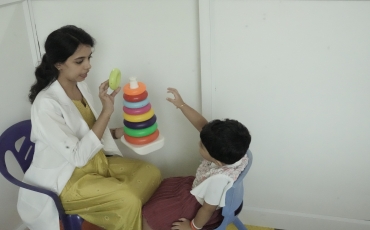
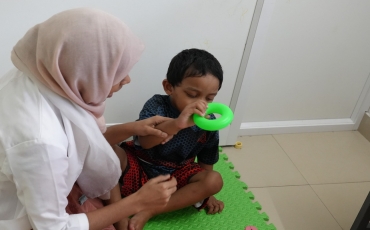
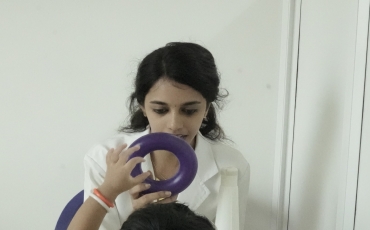
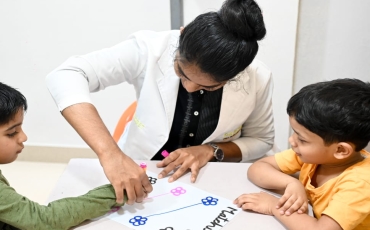
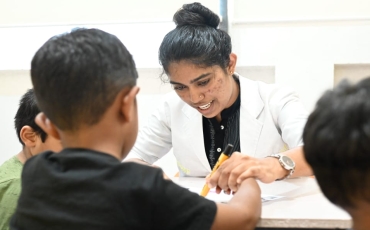
A speech-language pathologist, commonly called a speech therapist, evaluates and supports children with different communication needs.
Depending on the child's individual needs, speech therapy may address:
- Speech sound and pronunciation difficulties
- Difficulty understanding language
- Difficulty expressing thoughts and needs
- Limited vocabulary
- Difficulty forming sentences
- Social communication difficulties
- Fluency problems such as stammering
- Voice-related difficulties
- Communication difficulties associated with developmental conditions
A speech therapist does not simply teach a child to pronounce words. The assessment looks at the child's overall communication skills and identifies areas that may need support.
When Should a Child Start Speech Therapy?
There is no single age at which every child should begin speech therapy.
A child may benefit from an assessment when parents, teachers, doctors, or other caregivers notice that communication difficulties are persistent or affecting everyday activities.
Some situations where parents may consider consulting a speech therapist include:
1. Your Child Is Not Meeting Expected Communication Milestones
Children generally develop communication skills progressively. They begin by responding to sounds and familiar voices, then develop gestures, sounds, words, phrases, and increasingly complex communication.
If your child's communication development seems significantly different from what is expected for their age, discussing your concerns with a professional can be helpful.
Importantly, developmental milestones are not a diagnostic tool by themselves. A speech-language professional considers the child's overall development and communication profile.
2. Your Child Is Difficult to Understand
Young children commonly mispronounce some sounds while their speech develops.
However, if your child is frequently difficult for family members, teachers, or unfamiliar listeners to understand, a speech assessment may help identify whether there are speech sound or other communication difficulties.
This can include:
- Sound substitutions
- Missing sounds
- Unclear pronunciation
- Difficulty producing particular sounds
- Inconsistent speech production
3. Your Child Understands Less Language Than Expected
Speech therapy is not only about speaking.
Some children have difficulty understanding questions, instructions, words, or conversations.
For example, a child may struggle to:
- Follow age-appropriate instructions
- Understand common questions
- Identify familiar objects
- Understand concepts such as size, location, or quantity
- Follow conversations
These difficulties can be assessed as part of a broader speech and language evaluation.
4. Your Child Has Difficulty Expressing What They Want
Some children understand what others say but have difficulty expressing themselves.
You may notice that your child:
- Uses very few words
- Finds it difficult to combine words
- Struggles to form sentences
- Has difficulty explaining what happened
- Relies heavily on gestures instead of words
- Becomes frustrated when trying to communicate
A speech-language assessment can help determine which areas of expressive communication require support.
5. Your Child Has Persistent Pronunciation Problems
Some pronunciation errors are part of typical speech development.
However, persistent speech sound difficulties can sometimes affect how clearly a child communicates.
If you notice ongoing articulation problems or speech pronunciation difficulties, a speech therapist can assess the child's speech sound production and determine whether therapy is appropriate.
Does a Child Need to Be a Certain Age for Speech Therapy?
No.
Speech therapy is not limited to school-aged children.
Early childhood is an important period for communication development, and children can receive professional assessment and support when concerns arise.
The appropriate timing depends on the child's communication profile rather than simply their age.
For example, one child may need support for speech sound difficulties, while another may need help with expressive language or social communication.
Therefore, the question is not only “What age should speech therapy start?” but also “What communication difficulties is my child experiencing?”
Should Parents Wait for the Child to Start Talking?
Parents sometimes hear advice such as “He will start talking when he is ready” or “Give her a little more time.”
Children do develop at different rates, but persistent concerns should not automatically be dismissed.
If you are worried about your child's communication, speaking with a qualified professional does not necessarily mean that your child will need long-term therapy.
An assessment can simply provide information about your child's current skills and whether monitoring, home support, or therapy may be appropriate.
What Happens During a Speech Therapy Assessment?
A speech-language assessment is usually tailored to the child's age and communication concerns.
The speech therapist may look at:
- Understanding of language
- Use of words and sentences
- Speech sound production
- Ability to communicate needs
- Social communication
- Fluency
- Voice
- Interaction during play or conversation
The therapist may also ask parents about the child's developmental and communication history.
For some children, hearing may also need to be considered, particularly when there are concerns about how the child hears or responds to sounds.
The assessment helps the professional understand the child's strengths and areas where additional support may be useful.
Does Starting Speech Therapy Early Always Mean More Therapy?
Not necessarily.
The amount and duration of speech therapy depend on the child's individual needs.
Some children may benefit from a short period of targeted support and parent-guided activities. Others may require longer-term therapy because their communication difficulties are more complex.
The purpose of early assessment is not to place every child into therapy. It is to identify concerns early and determine the appropriate next step.
How Can Parents Support Speech Development at Home?
Parents play an important role in supporting communication development.
Simple everyday activities can provide opportunities for children to communicate.
Talk During Daily Activities
Describe what you and your child are doing while eating, bathing, getting dressed, travelling, or playing.
Read Together
Look at picture books and talk about characters, objects, actions, and events.
Give Your Child Time to Respond
After asking a question or making a comment, give your child enough time to respond instead of answering immediately for them.
Follow Your Child's Interests
If your child is interested in cars, animals, drawing, or a particular game, use that interest to encourage communication.
Avoid Turning Every Conversation Into a Test
Communication should feel natural and enjoyable. Instead of repeatedly asking a child to repeat a word, model the correct word naturally during conversation.
If your child is already attending therapy, follow the specific activities and recommendations provided by their speech-language pathologist.
When Should You Consult a Speech Therapist?
Consider speaking with a qualified speech-language professional if you have ongoing concerns about:
- Your child's speech clarity
- Delayed or limited language development
- Understanding language
- Expressing thoughts and needs
- Social communication
- Stammering or other fluency difficulties
- Voice
- Communication difficulties associated with developmental conditions
You do not have to wait until the difficulty becomes severe before asking for professional guidance.
A consultation can help parents understand their child's communication skills and decide what steps, if any, are appropriate.
Finding a Speech Therapist in Calicut
For parents looking for a Speech Therapist in Calicut, choosing a professional who has experience working with children can help ensure that the assessment and therapy approach is appropriate for the child's age and communication needs.
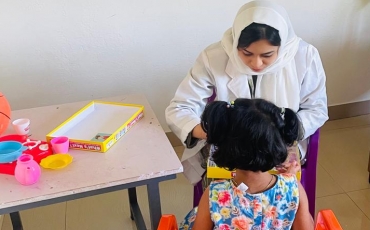
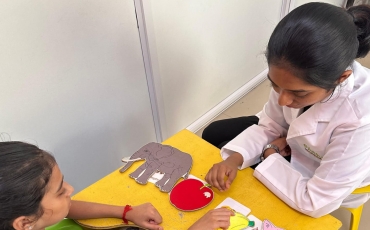
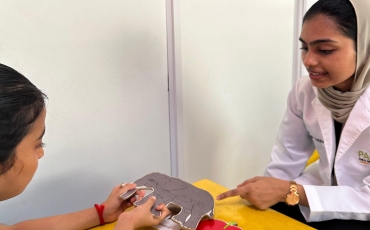
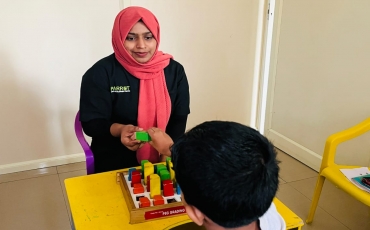
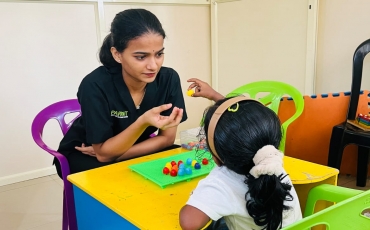
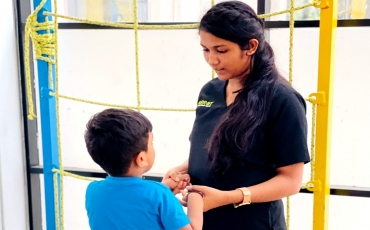
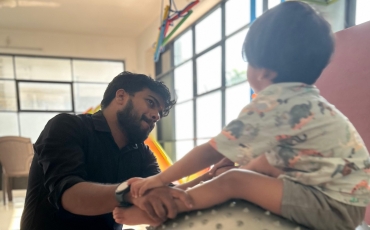
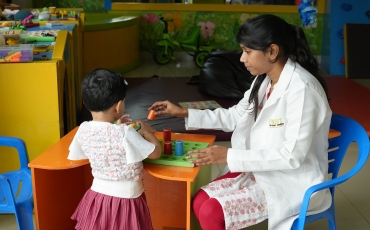
At Parrot Child Development Centre, speech and language professionals work with children with different communication needs.
The Speech Therapy service at Parrot includes assessment and intervention related to areas such as speech sounds, articulation, receptive and expressive language, social communication, fluency, voice, and other communication skills.
Parents can discuss their concerns with the professional team and understand whether their child may benefit from speech therapy, monitoring, or other developmental support.
For more information about Speech Therapy in Calicut, parents can explore Parrot's speech therapy service and related parent resources.
Frequently Asked Questions
What age should a child start speech therapy?
There is no single age that applies to every child. A child can be assessed whenever there are concerns about speech, language, communication, fluency, or voice.
Should I wait if my child is a late talker?
If you are concerned about your child's communication development, you can seek professional advice rather than relying only on waiting. An assessment can help determine whether the child needs monitoring, support, or therapy.
Can a 2-year-old go to speech therapy?
Yes. Young children can receive speech and language assessment and, when appropriate, intervention. The approach is adapted to the child's age and developmental needs.
Does speech therapy only help children who cannot speak?
No. Speech therapy can support children with a range of communication difficulties, including speech sound problems, language difficulties, fluency issues, voice concerns, and social communication challenges.
How do I know if my child needs a speech therapist?
If your child's communication difficulties are persistent, difficult to understand, affecting everyday interactions, or causing concern for you or others involved in the child's care, consider discussing them with a qualified speech-language professional.
Conclusion
So, when should a child start speech therapy?
There is no fixed age that applies to every child. The right time to seek professional advice depends on the child's individual speech and language development and the concerns parents are noticing.
If your child has persistent difficulty with speech sounds, understanding language, expressing ideas, communicating with others, or speaking fluently, a professional assessment can provide useful guidance.
Parents in and around Calicut who are looking for a Speech Therapist in Calicut can consult a qualified speech-language professional to understand their child's communication needs and explore appropriate support.
At Parrot Child Development Centre, speech and language support is tailored to the individual needs of each child.