
How Pediatric Speech Therapy Helps Children Improve Communication Skills
Communication is an important part of a child's everyday development. Children use communication to express their needs, interact with family members, participate in school activities, make friends, and understand the world around them.
Some children develop communication skills naturally, while others may need additional support. Difficulties with speaking, understanding language, pronunciation, or social communication can make everyday interactions challenging.
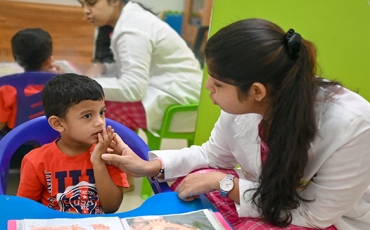
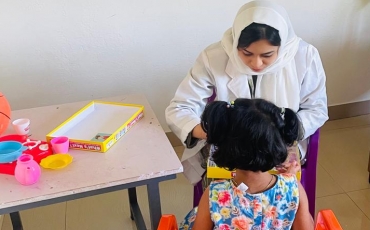
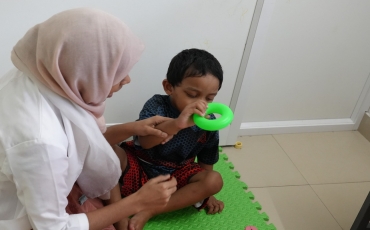
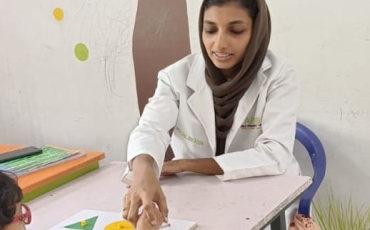
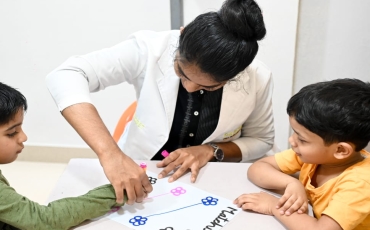
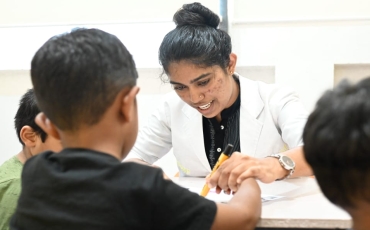
Pediatric speech therapy helps children develop communication skills according to their individual needs. Through assessment and structured therapy activities, a speech-language professional can identify areas of difficulty and create appropriate goals for the child.
What Is Pediatric Speech Therapy?
Pediatric speech therapy is speech and language support specifically designed for children.
A speech-language professional may assess different areas of communication, including:
- Understanding spoken language
- Using words and sentences
- Pronunciation and speech sounds
- Vocabulary development
- Fluency
- Voice
- Social communication
- Conversation skills
- Functional communication
The focus of therapy depends on the child's age, developmental stage, communication abilities, and specific concerns.
How Does Speech Therapy Improve Communication Skills?
1. Helps Children Express Their Needs
Some children understand what they want but struggle to communicate it.
They may rely heavily on gestures, pointing, crying, or other behaviors instead of words.
Speech therapy can help children gradually develop ways to communicate their needs, choices, thoughts, and feelings.
The goal is not simply to make a child speak more words. It is to help the child communicate more effectively in everyday situations.
2. Supports Vocabulary Development
Vocabulary is an important foundation for communication.
Children may need support learning:
- Names of people and objects
- Action words
- Describing words
- Concepts
- Question words
- Words related to everyday routines
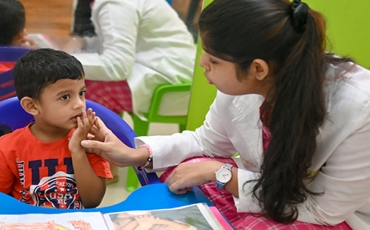
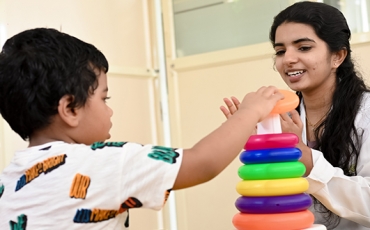
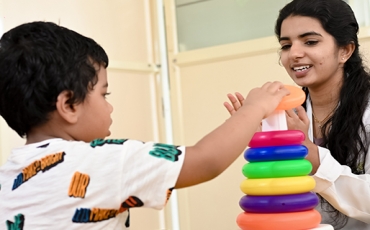
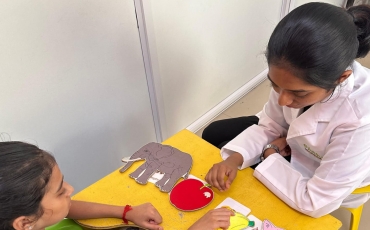
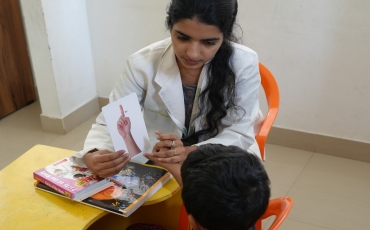
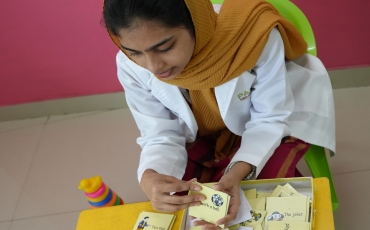
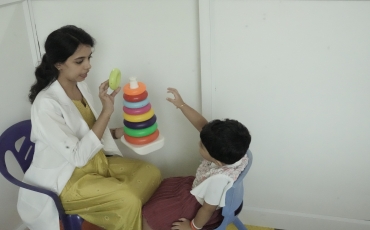
A speech therapist can use play, books, pictures, conversations, and everyday activities to encourage vocabulary development.
3. Helps Children Build Sentences
Some children use individual words but find it difficult to combine them into meaningful sentences.
For example, a child may know the words “juice” and “want” but struggle to combine them to express what they need.
Therapy can support the development of longer and more meaningful sentences based on the child's current language abilities.
4. Improves Speech Clarity
A child may have difficulty producing certain speech sounds correctly.
This can make their speech difficult for parents, teachers, or other children to understand.
Speech therapy may include activities that help children:
- Recognize speech sounds
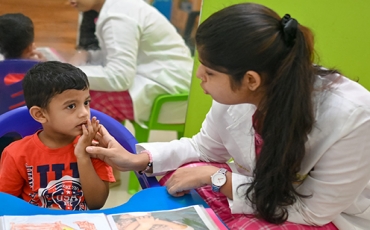
- Produce sounds more accurately
- Practice sounds in words
- Use sounds in sentences
- Improve overall speech intelligibility
The specific approach depends on the child's speech sound pattern and assessment.
5. Supports Understanding of Language
Communication is not only about speaking.
Children also need to understand what others are saying.
Some children may have difficulty understanding:
- Simple or complex instructions
- Questions
- Vocabulary
- Concepts
- Stories
- Conversations
Pediatric speech therapy can include activities designed to strengthen receptive language skills.
6. Develops Conversation Skills
As children grow, communication becomes more complex.
They need to learn how to:
- Start conversations
- Respond to others
- Take turns
- Ask questions
- Stay on a topic
- Share information
- Listen to others
Speech therapy can support these skills when a child has difficulties with conversational communication.
7. Supports Social Communication
Some children find it difficult to use communication effectively during social interactions.
They may have difficulty understanding social cues, maintaining interactions, responding appropriately, or using communication for different social purposes.
Therapy can focus on practical social communication skills that the child can use at home, school, and during play.
Who May Benefit From Pediatric Speech Therapy?
Children with different communication needs may benefit from a speech and language assessment.
This may include children experiencing:
- Speech delay
- Language delay
- Late talking
- Speech sound difficulties
- Stammering or fluency concerns
- Difficulty understanding language
- Difficulty expressing thoughts
- Social communication difficulties
- Communication difficulties associated with autism
- Developmental or neurological conditions affecting communication
Having one of these concerns does not automatically mean a child requires long-term therapy. A professional assessment can help determine the child's individual needs.
Pediatric Speech Therapy for Toddlers
Parents often wonder whether a child is too young for speech therapy.
Speech and language support can be considered during the early years when there are concerns about communication development.
For example, parents may seek professional guidance when a toddler:
- Uses very few words
- Is not progressing with communication
- Has difficulty understanding simple language
- Does not use communication effectively to express needs
- Relies mainly on gestures
- Has lost previously acquired communication skills
Early assessment can help parents understand their child's communication development and identify appropriate support.
Pediatric Speech Therapy and Autism
Children with autism can have a wide range of communication profiles.
Some children may have limited spoken language, while others may speak in sentences but experience difficulties with social communication.
Depending on the child's assessment, speech therapy may support:
- Functional communication
- Language development
- Social communication
- Conversation skills
- Understanding and expressing language
- Use of alternative or augmentative communication when appropriate
Speech delay by itself does not indicate autism. If parents have broader developmental concerns, a comprehensive developmental assessment is important.
Why Is Assessment Important Before Therapy?
Every child's communication profile is different.
Two children of the same age may have completely different strengths and difficulties. Therefore, therapy should be based on an assessment rather than using the same activities for every child.
A speech-language professional may assess:
- Receptive language
- Expressive language
- Speech sounds
- Fluency
- Voice
- Social communication
- Functional communication
Parents can read our detailed guide on Speech Therapy Assessment for Children to understand more about the assessment process.
How Parents Can Support Communication at Home
Parents can support communication development through everyday activities.
Talk during daily routines
Describe what you and your child are doing while bathing, eating, dressing, shopping, or playing.
Give your child time to respond
Instead of immediately answering for your child, allow them enough time to process the question and respond.
Read together
Picture books provide opportunities to introduce vocabulary, ask questions, describe pictures, and talk about stories.
Follow the child's interests
If your child enjoys cars, animals, blocks, or drawing, use those interests to encourage communication.
Encourage communication instead of correcting constantly
Create opportunities for the child to communicate naturally rather than turning every interaction into a test.
Parents can discuss home strategies with their child's speech therapist so that activities are appropriate for the child's individual goals.
Choosing Pediatric Speech Therapy in Calicut
When looking for Pediatric Speech Therapy in Calicut, parents can consider several factors.
Professional assessment
The service should understand the child's individual communication profile before developing therapy goals.
Child-friendly approach
Children learn differently from adults. Therapy activities should be suitable for the child's age and interests.
Individualized goals
Therapy goals should reflect the child's specific communication needs rather than using identical goals for every child.
Parent guidance
Parents should understand how they can support communication skills outside therapy sessions.
Pediatric Speech Therapy in Calicut at Parrot Child Development Centre
Parrot Child Development Centre provides speech and language assessment and therapy for children with different communication needs.
The speech therapy team works on areas such as speech, articulation, receptive and expressive language, fluency, voice production, social interaction, cognitive communication skills, and related communication needs.
For parents looking for Pediatric Speech Therapy in Calicut, an individual assessment can help identify the child's strengths, challenges, and appropriate therapy goals.
Frequently Asked Questions
What does pediatric speech therapy help with?
Pediatric speech therapy can support speech, language, pronunciation, fluency, social communication, and other communication skills depending on the child's individual needs.
Can speech therapy help a child with speech delay?
Speech therapy may help children with speech and language delays. An assessment helps determine the areas requiring support and whether therapy is appropriate.
Is pediatric speech therapy only for children who cannot speak?
No. Speech therapy can support children who speak but have difficulties with pronunciation, language, fluency, social communication, or understanding and expressing language.
How early can a child receive speech therapy?
There is no single age at which every child should begin therapy. When parents have concerns about communication development, they can seek an assessment to understand the child's needs.
How can parents support speech therapy at home?
Parents can support communication through talking, reading, play, daily routines, and following strategies recommended by the child's speech-language professional.
Conclusion
Communication skills play an important role in a child's development, learning, relationships, and everyday participation. When a child experiences difficulties with speech, language, or communication, professional assessment can help parents understand the reason for the difficulty and identify appropriate support.
Pediatric Speech Therapy in Calicut can provide structured support for children with different speech and language needs. At Parrot Child Development Centre, therapy is based on the child's individual communication profile and developmental needs.