
Speech Therapy for Toddlers: When Should Parents Seek Help?
The toddler years are an important period for communication development. During this stage, children gradually learn new words, understand language, combine words, respond to questions, and communicate their needs and interests.
Every child develops at their own pace. However, when a toddler continues to experience difficulties with communication or shows little progress over time, parents may wonder whether professional support is needed.
Speech therapy for toddlers can help identify communication difficulties early and provide age-appropriate support based on the child's individual needs.
What Is Speech Therapy for Toddlers?
Speech therapy for toddlers focuses on developing communication skills in young children.
A speech-language professional may work on areas such as:
- Understanding language
- Learning and using new words
- Combining words
- Expressing needs and ideas
- Speech sound development
- Social communication
- Interaction and turn-taking
- Functional communication
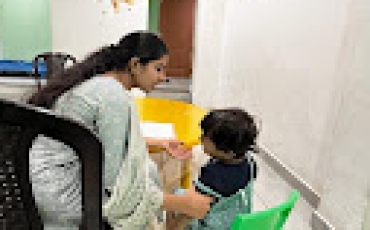
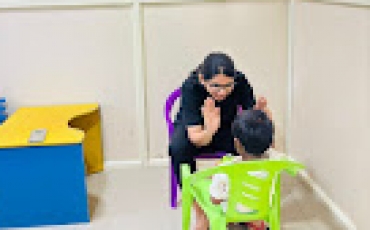
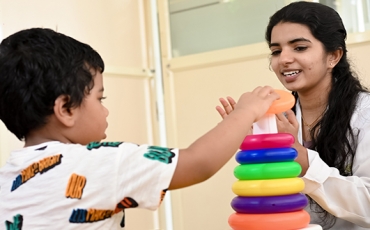
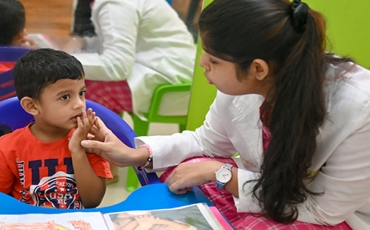
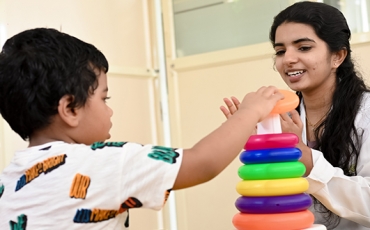
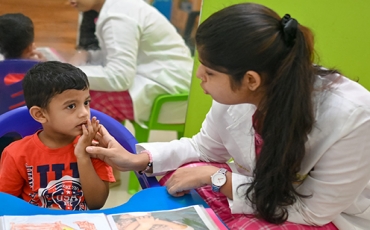
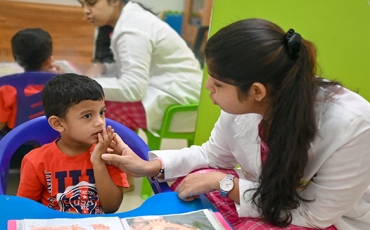
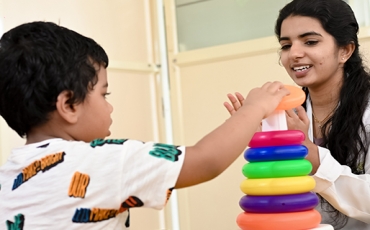
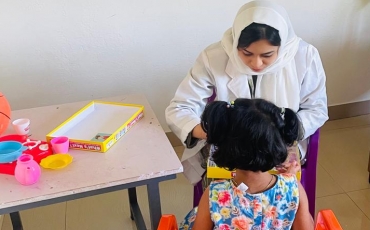
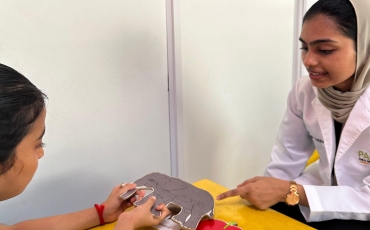
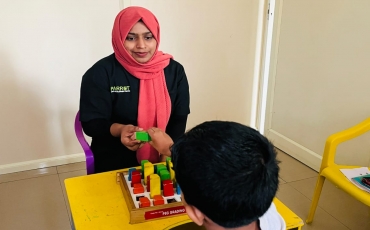
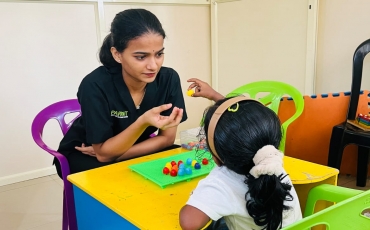
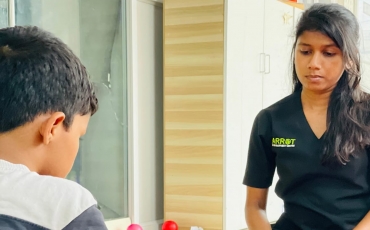
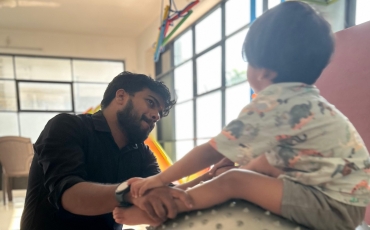
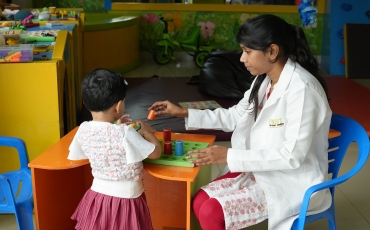
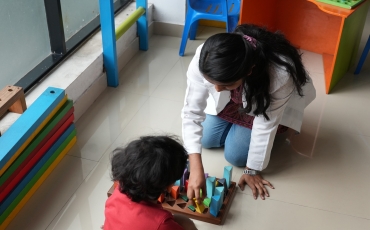
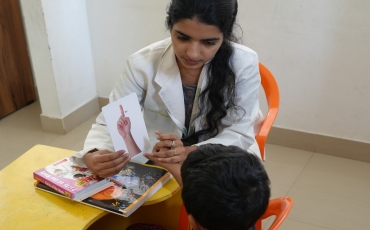
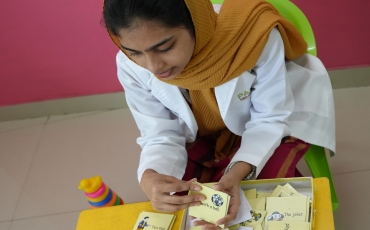
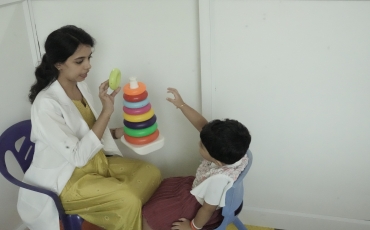
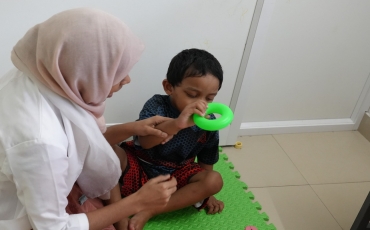
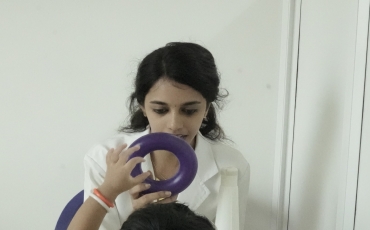
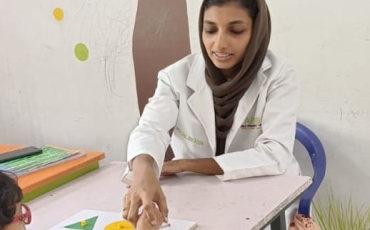
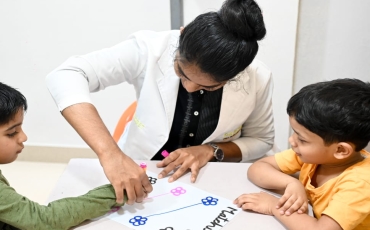
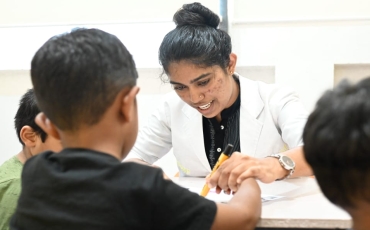
Therapy for toddlers is generally adapted to their developmental level and may involve play, books, songs, toys, pictures, and everyday activities.
The purpose is to make communication practice natural and meaningful for the child.
When Do Toddlers Start Talking?
There is a wide range of normal variation in early communication development. Children do not all reach language milestones at exactly the same time.
Parents may observe gradual progress such as:
- Using gestures to communicate
- Understanding familiar words
- Learning new words
- Naming familiar people or objects
- Combining words
- Following simple instructions
- Asking for something they want
- Participating in simple interactions
Rather than focusing only on a particular number of words, parents should also consider whether their child is making progress in communication over time.
If development appears to have stalled or there are multiple concerns, a professional assessment can provide useful information.
Signs of Speech Delay in Toddlers
Parents may consider seeking professional guidance if their toddler:
Uses very few words
The child may use significantly fewer words than expected for their developmental stage or may not be adding new words over time.
Has difficulty combining words
Some toddlers may continue using isolated words and find it difficult to combine words to communicate more specific ideas.
Has difficulty expressing needs
A child may frequently become frustrated because they cannot communicate what they want, need, or feel.
Has difficulty understanding language
Communication concerns are not limited to speaking.
A toddler may also have difficulty understanding simple instructions, familiar words, questions, or everyday language.
Relies mainly on gestures
Gestures are an important part of early communication. However, if a child relies almost entirely on pointing, pulling adults, or other gestures without developing spoken or other functional communication, parents may wish to seek an assessment.
Is difficult to understand
Some speech sound differences are expected as children develop. However, if a toddler's speech is consistently difficult for familiar people to understand, a speech-language assessment may be helpful.
Shows little communication progress
One important consideration is progress.
If a child has been using roughly the same communication skills for an extended period without developing new abilities, parents can discuss their concerns with a professional.
Does Late Talking Always Mean a Child Needs Speech Therapy?
No.
Some children who talk later than their peers may continue to develop communication skills without ongoing therapy. However, it can be difficult for parents to determine whether a child is simply developing at a different pace or whether there is an underlying communication difficulty.
A professional assessment can look at the child's:
- Understanding of language
- Vocabulary
- Gestures
- Play skills
- Social interaction
- Speech sounds
- Ability to communicate needs
- Overall communication development
This helps parents make decisions based on the child's individual profile rather than age alone.
You can also read our related article on Speech Delay in Children: Causes, Signs and When to Seek Help.
How Can Speech Therapy Help Toddlers?
Speech therapy is individualized. Depending on the child's needs, therapy may help with several areas.
Building vocabulary
Therapy can create opportunities for toddlers to learn and use meaningful words during play and everyday activities.
Encouraging word combinations
Children who are beginning to use words may be encouraged to combine them into simple phrases as their language develops.
Improving understanding
Therapy may include activities that support understanding of words, instructions, questions, and concepts.
Encouraging functional communication
The focus can be on helping the child communicate for practical purposes, such as requesting, refusing, commenting, greeting, or asking for help.
Supporting social interaction
Some toddlers may need help learning how to take turns, share attention, interact during play, or respond to others.
Supporting speech development
When speech sound difficulties are identified, therapy can address the child's specific speech needs at an age-appropriate level.
What Happens During a Toddler Speech Therapy Assessment?
Before beginning therapy, a speech-language professional may assess the child's communication abilities.
The assessment may consider:
- Receptive language
- Expressive language
- Vocabulary
- Speech production
- Gestures
- Play and interaction
- Social communication
- Functional communication
Parents may also be asked about pregnancy and birth history, developmental milestones, hearing, communication at home, and any concerns they have noticed.
The assessment helps determine which areas need support and whether speech therapy is appropriate.
For more information, parents can read our guide on Speech Therapy Assessment for Children.
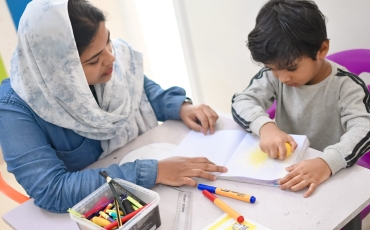
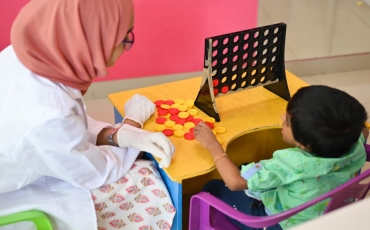
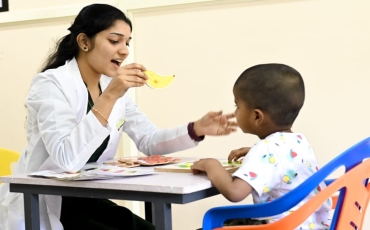
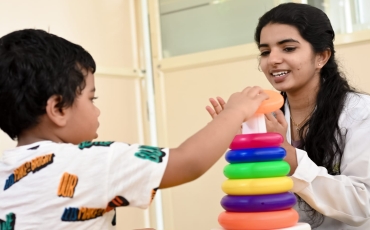
What Does Toddler Speech Therapy Look Like?
Speech therapy for toddlers is different from traditional classroom-style learning.
A therapist may use:
- Toys
- Picture books
- Puzzles
- Pretend play
- Songs
- Everyday objects
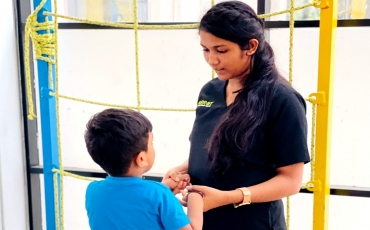
- Movement activities
- Interactive games
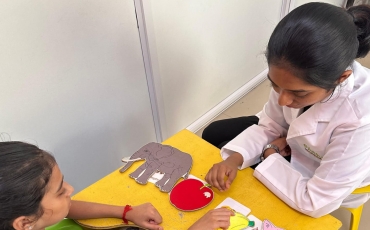
For example, during a play activity involving animals, the therapist may encourage the child to identify animals, imitate sounds, request an object, follow instructions, or combine words.
The activities are selected according to the child's communication goals.
How Parents Can Support Speech Development at Home
Parents can play an important role in supporting communication outside therapy sessions.
Talk during everyday routines
Use simple language while eating, bathing, dressing, shopping, or travelling.
Follow your child's interests
If your child enjoys cars, animals, blocks, or drawing, use those activities as opportunities for communication.
Expand what your child says
If a child says “car,” a parent might naturally respond with “red car” or “big car,” depending on the situation.
Read picture books together
Talk about the pictures, name objects, ask simple questions, and allow your child to respond.
Give your child opportunities to communicate
Instead of anticipating every need immediately, create natural opportunities for the child to request, choose, comment, or ask for help.
Allow time to respond
Give your toddler enough time to process what you have said and attempt a response.
Parents can discuss specific home strategies with their child's speech-language professional.
What If My Toddler Is Not Speaking Yet?
If a toddler is not speaking or has very limited communication, parents do not necessarily need to wait and see indefinitely.
A professional assessment can help determine what communication skills the child already has and whether additional developmental support may be appropriate.
It is also important to consider communication beyond spoken words. Gestures, eye contact, shared attention, understanding, play, and other forms of communication can provide useful information about a child's overall development.
If there are concerns about hearing, developmental skills, or social communication, the appropriate healthcare or developmental professional can guide parents toward further assessment.
Speech Therapy for Toddlers and Autism
Some toddlers with autism may have communication differences, including delayed spoken language or difficulties with social communication.
However, speech delay alone does not mean that a child has autism.
If parents notice concerns involving communication along with social interaction, play, repetitive behaviors, or other developmental areas, a broader developmental assessment may be recommended.
For children diagnosed with autism, speech therapy can support communication according to the child's individual needs.
Choosing Speech Therapy for Children in Calicut
Parents looking for Speech Therapy for Children in Calicut can consider several factors when choosing a service.
Child-focused assessment
The therapist should understand the child's individual communication abilities and concerns.
Appropriate experience
Look for professionals who work with children and understand early communication development.
Individualized therapy
Children have different communication profiles, so therapy goals should be based on the child's assessment.
Parent involvement
Parents should receive practical guidance that can be incorporated into everyday routines.
Multidisciplinary support
When a child has broader developmental concerns, access to other child development professionals can be useful.
Speech Therapy for Toddlers at Parrot Child Development Centre
Parrot Child Development Centre provides speech and language assessment and therapy for children with different communication needs.
The speech therapy team assesses areas including receptive and expressive language, speech and articulation, fluency, voice, social interaction, and other communication skills.
For parents looking for Speech Therapy for Children in Calicut, an assessment can help identify the child's communication strengths and areas that may need additional support.
Frequently Asked Questions
At what age should a toddler start speech therapy?
There is no single age that applies to every child. If parents have concerns about their toddler's communication development, they can seek a professional assessment rather than relying only on age-based comparisons.
Is it normal for toddlers to have unclear speech?
Young children are still developing their speech sounds, so some differences are expected. However, persistent or significant difficulty understanding a child's speech can be discussed with a speech-language professional.
Can speech therapy help a late-talking toddler?
Speech therapy may help when a child has identified speech or language difficulties. An assessment helps determine the child's individual communication needs.
Should I wait if my toddler is not talking?
If you are concerned about your child's communication development, seeking professional guidance can help you understand whether the child would benefit from assessment or support.
Can parents support speech development at home?
Yes. Talking during routines, reading together, playing, following the child's interests, and creating opportunities for communication can all support language development.
Conclusion
The toddler years are an important period for communication development. While children develop at different rates, ongoing concerns about speech, language, understanding, or communication should not be ignored.
Speech therapy for toddlers focuses on the child's individual communication needs and can provide age-appropriate support through play and everyday interactions.
For families looking for Speech Therapy for Children in Calicut, a professional assessment can be the first step toward understanding a child's communication development and identifying appropriate support.